Renting or Leasing Your Vehicle to Rideshare Drivers in Chicago Has Never Been Easier
Afzaal Zeb ·
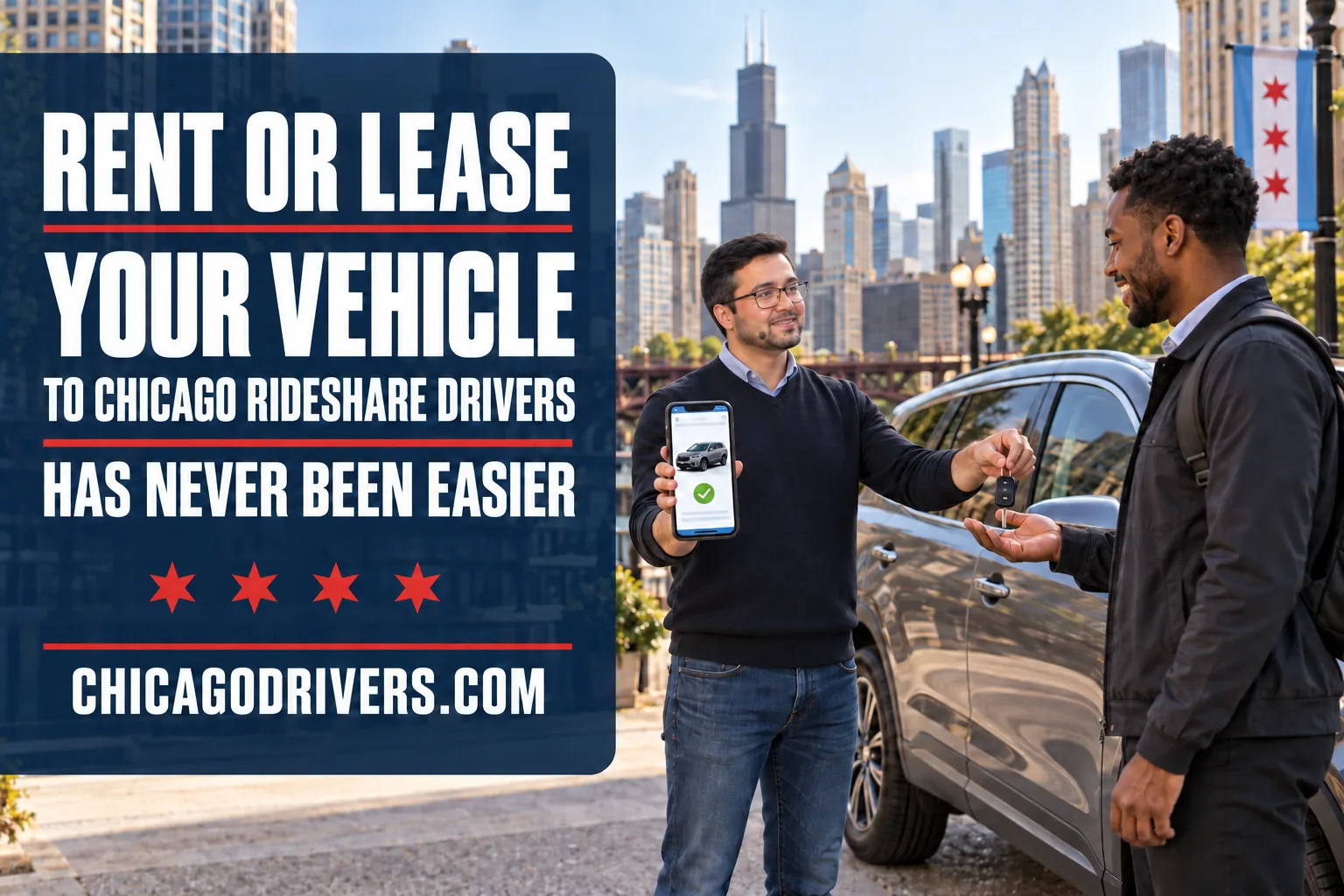
If you own a vehicle that qualifies for rideshare work and it's sitting idle — or you're a dealer or small fleet owner with cars between uses — there's steady demand you might not be tapping into. A lot of people want to drive for Uber or Lyft in Chicago but don't own a car that meets the requirements. That gap is exactly what the ChicagoDrivers.com (opens in a new tab) Marketplace is built to close.
Why this demand exists
Rideshare platforms have vehicle-year and condition requirements that not everyone can meet on day one. Some drivers are between cars. Some are testing out rideshare driving before committing to a purchase. Some simply prefer renting or leasing over financing a vehicle outright. All of them are actively looking for a qualifying vehicle they can rent or lease locally — and most of them are searching online right now.
How the Marketplace makes listing simple
Instead of posting a vague classified ad and hoping the right person sees it, ChicagoDrivers.com (opens in a new tab) puts your listing directly in front of Chicago-area rideshare, taxi, livery, and delivery drivers who are already using the site's tools every day. Listing takes just a few steps:
Upload your vehicle — add photos, year, make, model, mileage, and condition.
Choose your listing type — for sale, for rent or lease, whichever fits what you're offering.
Set your terms — price, rental period, or lease length, plus any conditions you want listed up front.
Publish — your listing appears in the Marketplace where drivers are actively browsing.
There's no need to build a website, manage a spreadsheet of inquiries, or repost the same ad across five different classifieds sites every week.
Built-in messaging keeps your personal information private
This is one of the most overlooked advantages of using a dedicated platform instead of a general classifieds site: interested drivers message you through ChicagoDrivers.com (opens in a new tab)'s built-in messaging system, not through your personal phone number or email address. You never have to publish your contact information publicly to start a conversation.
That matters for a few reasons:
No spam calls or texts — inquiries stay inside the platform until you decide to share direct contact info with someone you're actually ready to do business with.
A record of the conversation — you have a written thread of what was discussed and agreed to, rather than a string of texts you might lose track of.
You control when to move a conversation off-platform — once you're comfortable with a specific driver, you can exchange direct contact details on your own terms, not because your number was sitting exposed in a public ad.
How insurance actually works when someone else drives your car for rideshare
This is the part vehicle owners ask about most, so it's worth explaining clearly: a standard personal auto policy is written for personal, non-commercial driving. Most personal policies exclude "livery" or for-hire use, which means coverage can drop out the moment the rideshare app is turned on — and Uber and Lyft's own insurance doesn't fully take over until a ride is actually accepted.
The good news is this gap is easy to close, and it's routine for both individual drivers and vehicle owners:
A rideshare endorsement can usually be added to an existing personal auto policy for a relatively small monthly cost. It extends the policy's coverage into the period when the app is on but no ride has been accepted yet — the exact window a standard policy typically excludes.
Most major insurers offer this add-on, and it's a normal request — not a special or unusual one. Whoever is actually driving the vehicle for rideshare work (whether that's you or the person renting/leasing from you) is the one who typically needs the endorsement on their policy, or needs to be added as a listed driver on a policy that already carries one.
If you're renting or leasing your vehicle out, it's worth confirming upfront whether the endorsement will sit on your policy with the renter added as a driver, or on a policy the renter carries themselves. Either way, don't assume a personal auto policy automatically covers rideshare use — that assumption is exactly where owners and drivers get caught off guard after an accident.
None of this needs to be complicated, but it does need to be confirmed before the vehicle changes hands. A quick call to an insurance agent to add a rideshare endorsement or add a driver to an existing policy is a normal, five-minute conversation — not a major hurdle.
A few practical tips for a smooth rental or lease
The platform makes finding a driver easy — the rest is still on you to do carefully:
Ask to see a valid driver's license and confirm the person actually holds (or is actively applying for) their TNP or chauffeur license.
Get any rental or lease terms in writing, even if it's a simple one-page agreement — mileage limits, payment schedule, who covers maintenance and insurance, and what happens if the vehicle is damaged.
Confirm insurance coverage before handing over the keys — whether that's your policy, theirs, or a rideshare-specific commercial policy, know who's covered and for what.
Bottom line
There's a real, steady pool of Chicago drivers looking for a vehicle to rent or lease right now, and ChicagoDrivers.com (opens in a new tab) Marketplace puts your listing directly in front of them — without you having to hand out your phone number to strangers to do it. If you've got a vehicle sitting idle, listing it takes a few minutes and puts you in front of exactly the audience that's looking.
Ready to list your vehicle? Head to the Marketplace on ChicagoDrivers.com (opens in a new tab) and post your first listing today.