O’Hare Airport Pickup and Drop-Off Guide for Livery and Black Car Drivers
Afzaal Zeb ·
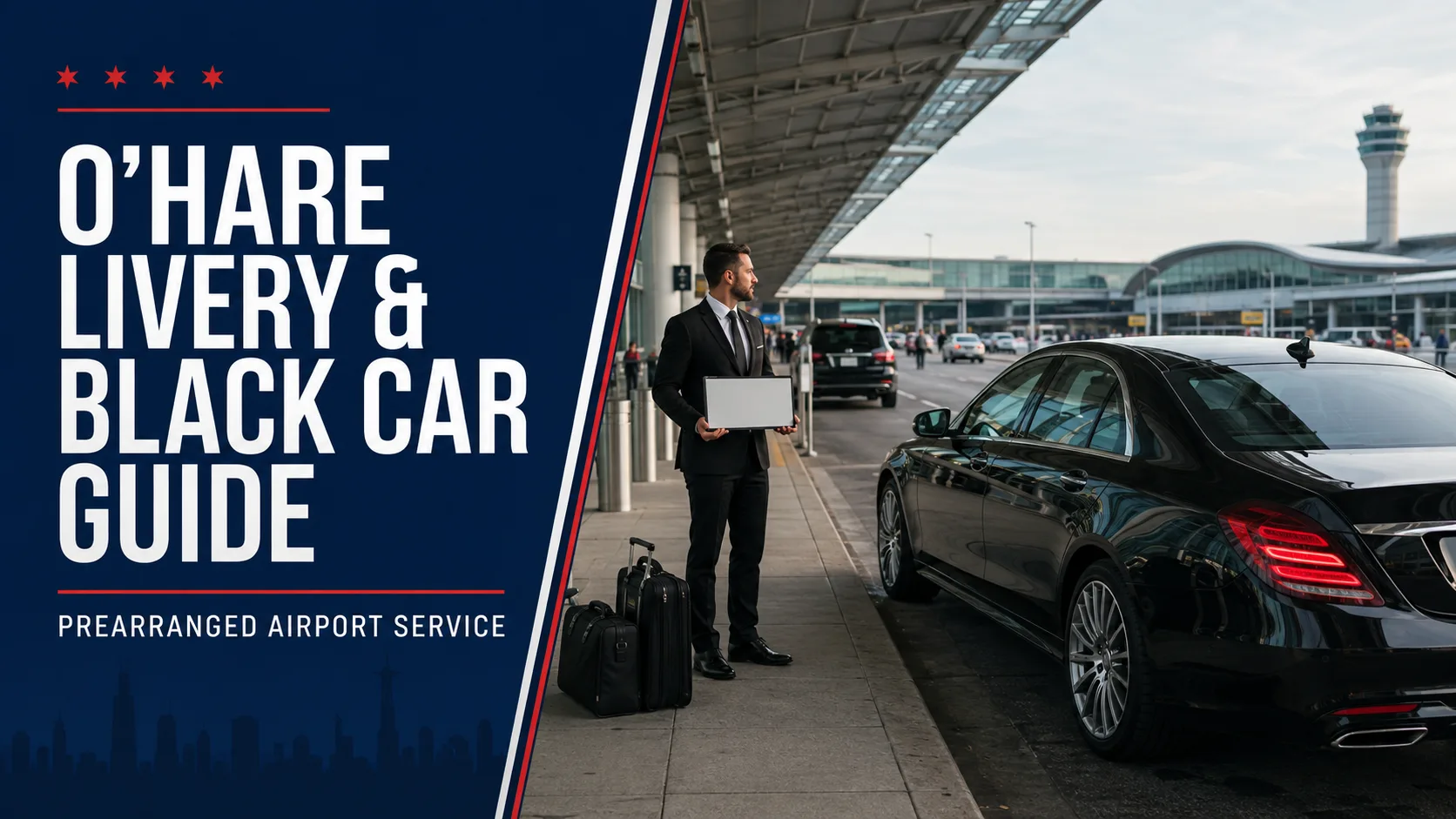
Livery and black car service at O’Hare is based on prearranged transportation. Unlike a taxicab, a livery driver generally cannot accept street hails or collect passengers from a taxi stand.
Professional airport service therefore requires clear communication, accurate flight monitoring and strict use of O’Hare’s designated livery pickup areas.
This article reflects official information available in August 2026. Livery licensing and airport operating procedures can change. Follow current BACP rules, airport signs, company instructions and directions from authorized personnel.
Every Livery Trip Must Be Prearranged
The City of Chicago states that livery rides and fares must be arranged in advance through an approved method such as phone, text, email or an application.
Livery vehicles cannot:
Accept street hails
Pick up from public taxi stands
Solicit passengers inside the terminal
Offer an unauthorized ride to a waiting traveler
Operate as a taxicab
Drivers and vehicle owners should maintain all licenses, insurance, plates, registrations and other documents required for their service.
Current licensing information is available through the City’s Public Passenger Vehicles page (opens in a new tab).
Monitor the Flight Before Entering O’Hare
Do not rely only on the scheduled arrival time.
Monitor:
Flight number
Estimated landing time
Actual landing time
Arrival terminal
Baggage status
Customs processing for international flights
Passenger communications
A plane marked “landed” may still be taxiing to the gate. The passenger may then need additional time to exit the aircraft and collect luggage.
International travelers may require substantially more time before they are ready for ground transportation.
Designated Livery Pickup Area
According to O’Hare’s official ground-transportation guidance, prearranged livery pickups occur in designated areas on the lower-level center lane, identified as Lane 2.
The airport notes that, depending on traffic, it can take approximately 5 to 20 minutes for a livery vehicle to reach the designated pickup location after the passenger calls.
Black car pickups continue to be offered on the lower level of all terminals. Drivers should still follow current company instructions, airport signs and assigned meeting details.
Review the official O’Hare limousine information (opens in a new tab) before airport service.
Coordinate the Meeting Location
After the passenger has collected luggage, provide:
Driver’s name
Vehicle make and color
License plate number
Terminal
Door or vestibule
Approved pickup lane
Estimated arrival time
A clear message might read:
Welcome to Chicago. After collecting your luggage, please call or message me with your terminal and door number. I will provide my vehicle description and meet you in the designated livery pickup area.
Do not instruct the passenger to cross unauthorized traffic lanes.
Meet-and-Greet Service
Some livery companies provide a meet-and-greet service inside baggage claim or another prearranged terminal location.
When this service is arranged, the driver may:
Park in the designated livery parking area
Enter the approved meeting location
Display the passenger’s name professionally
Assist with luggage
Escort the passenger to the vehicle
O’Hare indicates that designated livery parking is located across from the terminals and that the walk to the vehicle commonly takes approximately five to seven minutes.
Meet-and-greet service must be planned in advance. Do not leave a vehicle at the terminal curb while entering baggage claim.
Terminal 5 International Arrivals
For an international pickup:
Monitor the flight.
Wait for the passenger to clear immigration.
Confirm that checked baggage has been collected.
Confirm customs clearance.
Provide the approved meeting instructions.
Enter the pickup area only at the appropriate time.
Do not promise an exact curbside pickup time based solely on landing. Immigration, customs and baggage processing can vary.
Meet-and-greet service may be particularly useful for international executives, first-time visitors, families with substantial luggage and passengers without reliable U.S. phone service.
Livery Drop-Off at O’Hare
Before entering the airport, confirm:
Passenger’s airline
Departure terminal
Flight number
Domestic or international departure
Amount of luggage
Requested assistance
Follow Departures signs and use the authorized unloading location. Do not assume every international flight departs from Terminal 5.
Keep the unloading process professional and efficient. Check the rear seat and trunk after the passenger leaves to make sure no belongings were left behind.
Deliver Professional Airport Service
Livery customers often expect more than transportation alone.
Before pickup:
Clean the interior and exterior.
Remove odors and clutter.
Confirm climate control.
Charge communication devices.
Make room for luggage.
Review the route and traffic.
Confirm passenger preferences provided through the company.
Keep required documents available.
During the trip:
Verify the destination.
Drive smoothly.
Respect passenger privacy.
Avoid unnecessary calls.
Do not discuss confidential passenger information.
Follow the company’s billing and gratuity procedures.
Common Livery-Driver Mistakes
Accepting a non-prearranged passenger
Entering a taxi stand
Soliciting in baggage claim
Using a rideshare pickup zone
Waiting at the terminal curb
Arriving before the passenger clears customs
Leaving the vehicle unattended
Providing an unclear vehicle description
Failing to document the prearranged trip
Using an unauthorized pickup lane
Track Livery Operating Costs
Airport livery work can involve significant unpaid time and vehicle expense.
Record:
Pre-trip mileage
Waiting time
Parking
Tolls
Fuel or charging
Passenger-trip revenue
Driver payment
Vehicle cleaning
Deadhead mileage
Maintenance
Airport or company charges
ChicagoDrivers.com (opens in a new tab) can help livery operators organize expenses and maintain a service history for each vehicle.
Final Thoughts
O’Hare livery service must be prearranged and completed through designated lower-level pickup areas. Drivers should not use taxi stands, rideshare zones or public passenger curbs as substitutes.
Accurate flight monitoring and clear passenger communication are essential. A professional driver should know when the passenger is ready, which terminal to enter and exactly where the approved meeting will occur.