Chicago Livery & Black Car License Guide: How to Get Your Restricted Chauffeur License
Afzaal Zeb ·
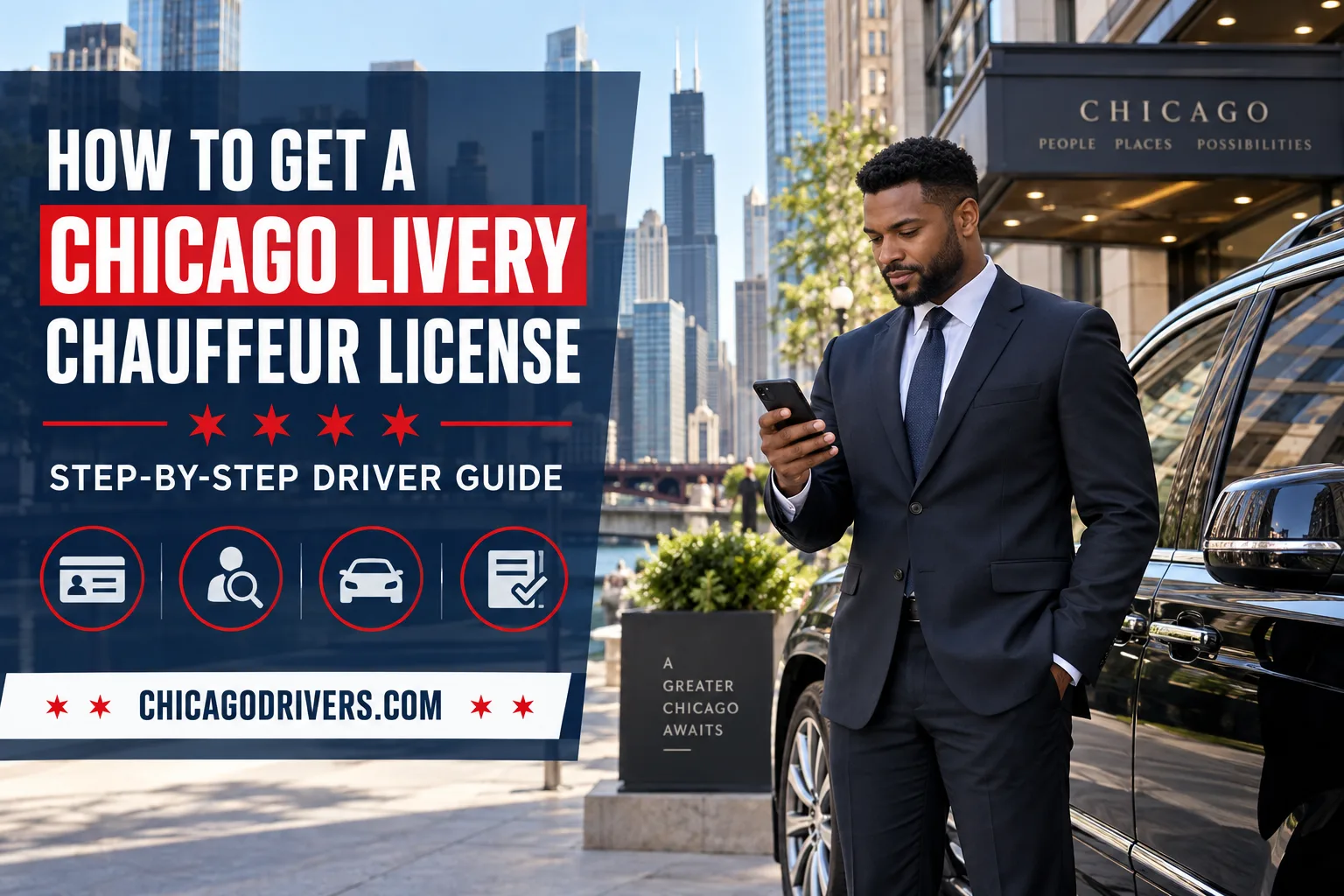
Livery and black car drivers in Chicago need a Restricted Public Chauffeur License — a separate license type from both taxi and rideshare, built specifically for prearranged, pre-negotiated-fare rides rather than street hails.
What "restricted" actually restricts
A Restricted Public Chauffeur License lets you operate a livery vehicle, limousine, or horse-drawn carriage — essentially any public passenger vehicle that is not a taxicab. Livery rides in Chicago have to be prearranged by phone, text, email, or app, and can't be street-hailed or picked up from a taxi stand the way a cab can. That distinction is the whole reason the license category exists separately from a taxi license.
Step 1: Complete restricted chauffeur training
Before you can be licensed, you need to complete a restricted chauffeur training program. This is typically a shorter course than the full taxi training — often a single day — and it has to cover service to passengers with disabilities as part of the curriculum. Many livery and limousine companies run their own approved training programs that satisfy this requirement directly, rather than sending new drivers through a separate city-run course.
Step 2: Pass the exam
After training, you'll sit for the Restricted Chauffeur licensing exam through BACP. As with the taxi track, this credential is issued directly to you by the city — not processed by a company the way a TNP emblem is — so you're responsible for your own application and renewal timeline.
Step 3: Background check and driving history
The same core requirements apply as with other public chauffeur licenses: a national/FBI/state criminal background check through fingerprinting, and a clean, current driving record. Many livery companies add their own standards on top of the city minimum — a clean motor vehicle record, a set amount of driving experience, and strong familiarity with Chicago and the surrounding suburbs are common expectations from employers, even though they aren't strictly city requirements.
Step 4: License term and renewal
Like the taxi chauffeur license, the Restricted Public Chauffeur License lists its own expiration date on the card, generally tied to your birthday rather than a single citywide date. Start your renewal up to 60 days ahead of that date to avoid any lapse in your ability to work.
A note on vehicle size and CDL overlap
If the livery or charter vehicle you're driving is built to carry 16 or more passengers including the driver, federal and state rules require a Commercial Driver's License with a Passenger endorsement instead of — or sometimes in addition to — the restricted chauffeur license, depending on the vehicle. Standard sedans, SUVs, and typical stretch limousines usually fall under the restricted license alone; larger party buses and full-size charter vehicles usually don't.
Bottom line
The livery path sits between taxi and rideshare in terms of process: it's a direct city license like taxi, but the training is shorter and many companies run their own approved course. If you're weighing livery work, factor in that many employers expect real Chicago-area driving experience on top of the bare licensing minimum — the city sets the floor, but the market sets a higher bar.
This post is for general information only. For the most current requirements, check directly with the City of Chicago BACP Public Vehicle Division or your employing livery company.