O’Hare Airport Guide for Shuttles, Buses and Commercial Drivers
Afzaal Zeb ·
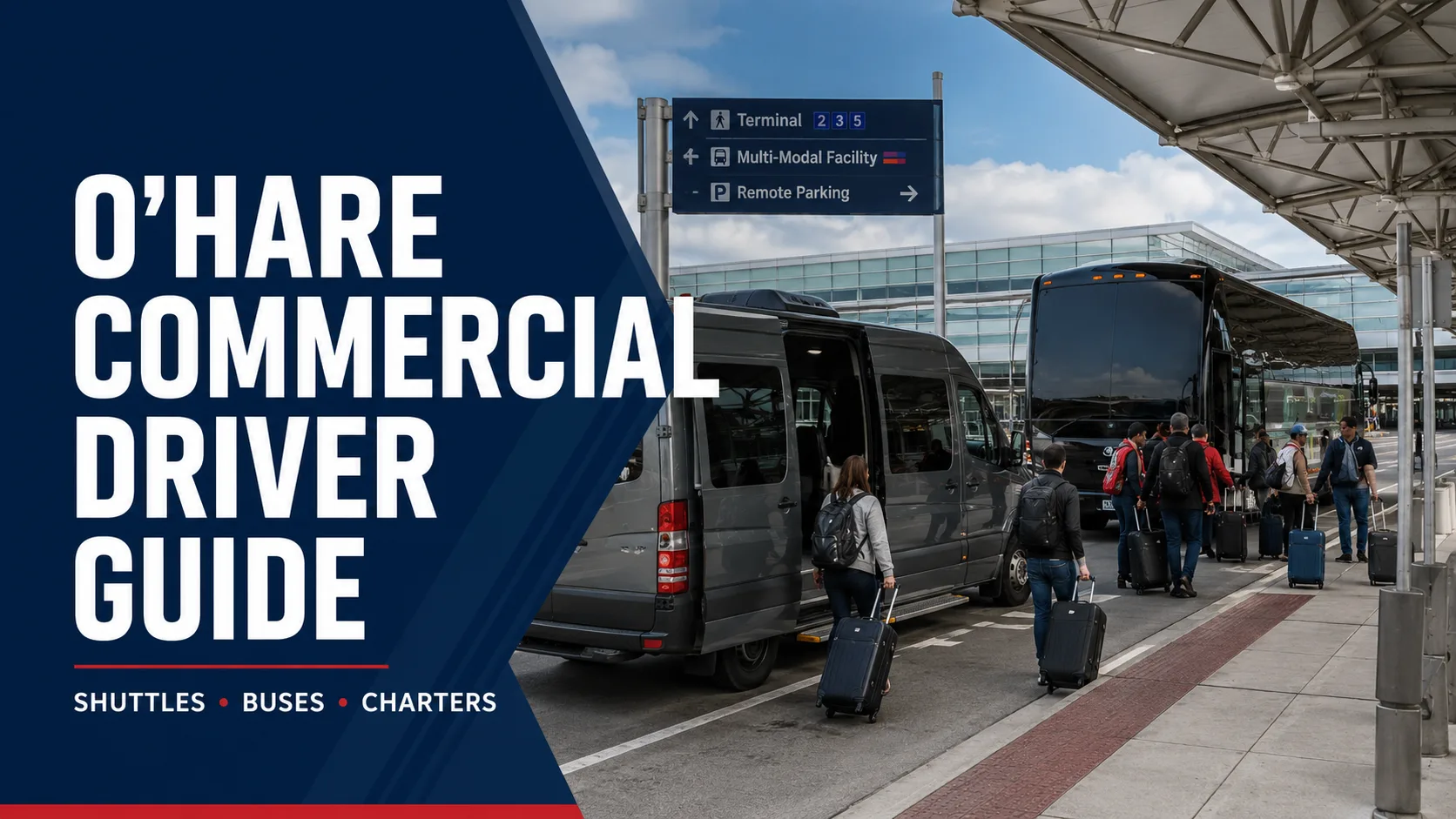
Commercial passenger transportation at O’Hare includes hotel shuttles, off-airport parking shuttles, scheduled regional buses, charter buses and other authorized operators.
These vehicles do not all use the same pickup location. A hotel shuttle should not automatically follow the procedure for a regional bus, and a charter bus cannot assume it may load at the Multi-Modal Facility.
This guide reflects official information available in August 2026. Commercial operators must follow their permits, operating authority, company procedures, airport signs and instructions from authorized personnel.
Confirm Your Vehicle and Service Category
Before entering O’Hare, determine which category applies:
Hotel shuttle
Off-airport parking shuttle
Scheduled regional bus
Nonscheduled charter bus
Sightseeing vehicle
Medicar or accessible transportation
Crew transportation
Airline-contracted vehicle
Other commercial passenger vehicle
The correct route and loading area depend on the type of service and current airport authorization.
Do not use a public curb or another operator’s loading zone simply because it appears convenient.
Hotel and Off-Airport Parking Shuttles
Official O’Hare information states that hotel and off-airport parking shuttle pickups have moved from the former Bus Shuttle Center to the Terminal 2 arrivals curbside.
Some shuttle operators may continue to serve Terminal 5. Passengers and drivers should confirm current Terminal 5 arrangements directly with the shuttle provider.
Operators should give passengers clear instructions containing:
Terminal
Door or vestibule
Vehicle description
Company name
Estimated arrival
Whether the passenger must transfer between terminals
Contact number for dispatch
Drivers should follow their company’s airport route and stop assignments.
Scheduled Regional Buses
Scheduled regional buses currently pick up at O’Hare’s Multi-Modal Facility, or MMF.
The MMF address is:
10255 W. Zemke Boulevard
Chicago, IL 60666
Passengers can use the free Airport Transit System to travel between the terminals and the MMF.
Scheduled operators should use their authorized bay or stop and follow the published timetable. Drivers should not move a scheduled regional pickup to a terminal curb unless officially authorized.
The official O’Hare Multi-Modal Facility page (opens in a new tab) provides current facility information.
Nonscheduled Charter Buses
O’Hare currently directs nonscheduled charter buses to:
Lower-level commercial lanes at Terminals 1, 2 and 3
Outer commercial lane at Terminal 5, Door 5D
O’Hare specifically states that charter buses are not permitted to use the Multi-Modal Facility.
Charter operators should coordinate the pickup in advance and provide passengers or group leaders with the correct terminal instructions.
Review the official O’Hare shuttle and bus information (opens in a new tab) before each assignment.
Group Pickup Planning
A group pickup requires more coordination than collecting an individual passenger.
Before arrival, confirm:
Airline and flight numbers
Arrival terminals
Group size
Number of bags
Group leader’s contact information
Approved commercial pickup location
Vehicle height and length restrictions
Loading time
Whether passengers will arrive together
Accessibility needs
Dispatch contingency plan
If group members arrive at different terminals or times, decide in advance whether they will gather at one authorized location.
Do not ask a group to walk across active commercial lanes or stand in an unsafe location.
Commercial Drop-Off Procedures
Before dropping passengers at O’Hare, confirm the airline and departure terminal.
The operating company should determine the authorized commercial unloading location for the vehicle type. Large buses, shuttles and specialty vehicles may be routed differently from private cars.
Drivers should:
Select the proper airport lane early.
Follow commercial-vehicle signs.
Use the assigned unloading area.
Activate warning equipment when required.
Prevent passengers from exiting into traffic.
Unload luggage from the safest available side.
Account for all passengers and baggage.
Leave promptly after unloading.
Never stop a large commercial vehicle in a location that obstructs terminal traffic.
Vehicle Height, Length and Turning Space
Large commercial vehicles require additional planning.
Before entering a garage, covered area or restricted lane, verify:
Posted clearance
Vehicle height
Overall length
Turning radius
Trailer restrictions
Weight restrictions
Permitted loading locations
Do not rely only on passenger-car navigation. Use company-approved routes and obey all airport commercial-vehicle signs.
Passenger Loading Safety
The driver and company should have a consistent loading procedure.
Consider:
Keeping passengers together
Using a group leader
Counting passengers before departure
Keeping people away from active lanes
Loading luggage before boarding when practical
Securing baggage compartments
Providing safe assistance
Confirming that doors are closed
Completing a final walk-around
For buses and vehicles subject to commercial safety regulations, complete all required inspections and documentation.
Driver Qualifications and Vehicle Licensing
Commercial passenger vehicles may require specific municipal, state or federal authority depending on vehicle size and service type.
Requirements may involve:
Appropriate driver’s license
Passenger endorsement
Public chauffeur license
Commercial-vehicle license or permit
Insurance
Vehicle inspection
Company operating authority
Airport authorization
Safety equipment
Hours-of-service compliance
Do not operate a service category for which the driver or vehicle is not properly authorized.
Chicago licensing information is available through the City’s Public Passenger Vehicles page (opens in a new tab).
Common Commercial-Driver Mistakes
Using the wrong terminal lane
Taking a charter bus to the MMF
Assuming every shuttle still uses an old pickup location
Blocking a taxi, livery or rideshare zone
Entering a low-clearance area
Arriving without a group contact
Allowing passengers to stand in an active lane
Loading beyond the permitted time
Operating without required documents
Following a passenger-car route unsuitable for a large vehicle
Maintain Commercial Vehicles Carefully
Airport service can involve idling, repeated stops, luggage loads and high daily mileage.
Track:
Pre-trip inspections
Mileage
Engine hours
Fuel or charging
Tire condition
Brake inspections
Fluid levels
Accessibility equipment
Emergency equipment
Cleaning
Repairs
Preventive maintenance
ChicagoDrivers.com (opens in a new tab)’s Vehicle Maintenance Log can help operators maintain organized service records. Drivers and owners can also use the expense tracker to monitor fuel, tolls, parking, repairs and other costs.
Final Thoughts
Commercial pickup procedures at O’Hare depend on the type of operation.
Hotel and off-airport parking shuttles generally use the Terminal 2 arrivals curbside, with some Terminal 5 service handled according to the provider’s instructions. Scheduled regional buses use the Multi-Modal Facility. Nonscheduled charter buses use designated terminal commercial lanes and may not use the MMF.
Confirm the current location before every assignment, follow company instructions and never substitute another transportation category’s loading zone.