Driving in Downtown Chicago: 15 Things You Should Know
Afzaal Zeb ·
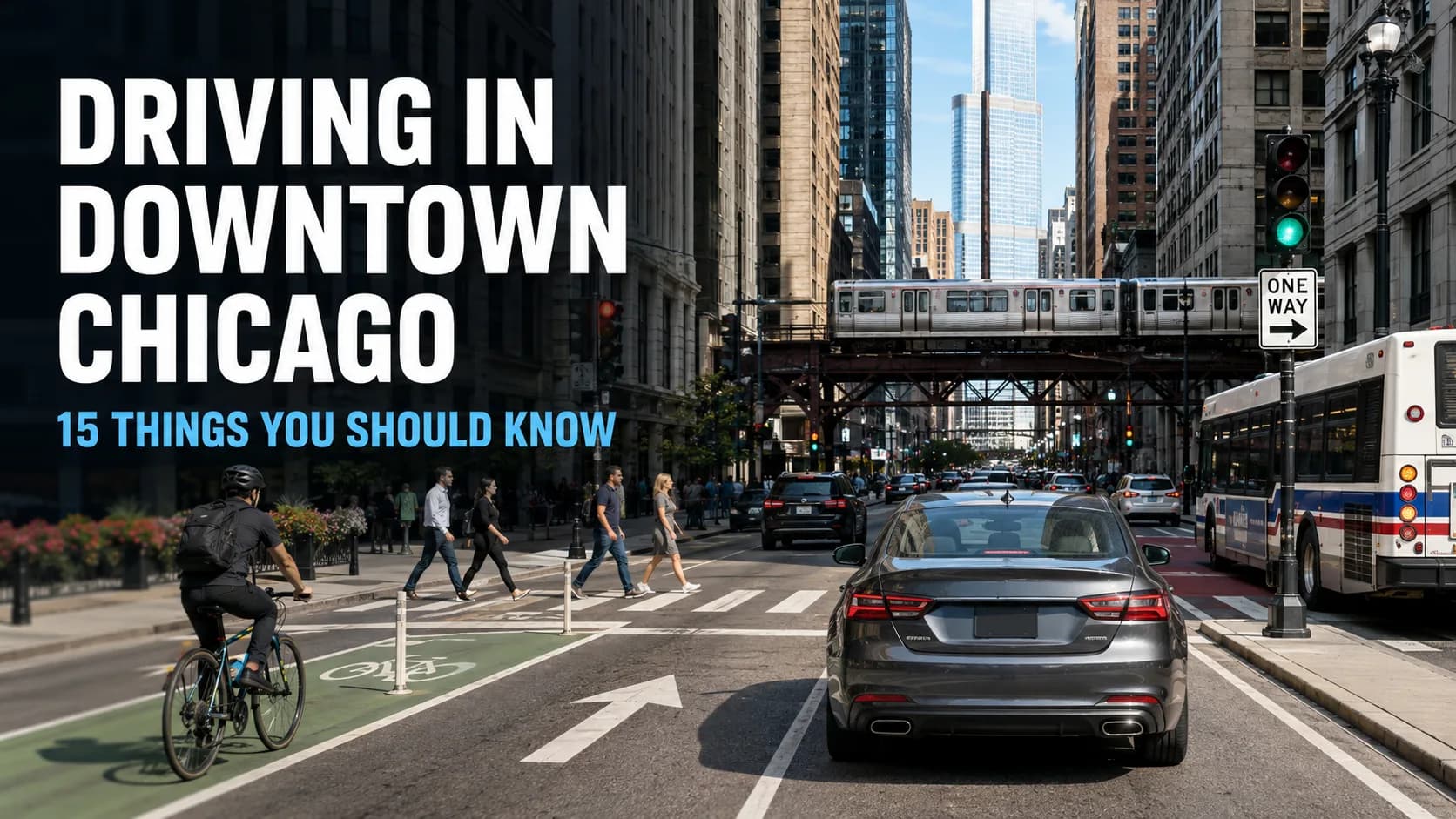
Driving in downtown Chicago can feel overwhelming, especially during rush hour, major events or construction. Busy intersections, pedestrians, cyclists, buses and one-way streets demand your full attention.
These 15 practical tips can help you navigate downtown more safely and confidently.
1. Check Traffic Before Leaving
Traffic conditions can change quickly because of crashes, construction, sporting events and street closures. Check your route before leaving and allow extra time.
2. Expect One-Way Streets
Many downtown streets are one-way. Watch posted signs carefully and do not depend entirely on navigation apps, which may occasionally provide delayed or confusing instructions.
3. Learn the Street-Address System
State Street divides east and west addresses, while Madison Street divides north and south. Understanding this system can help you determine which direction you need to travel.
4. Watch for Pedestrians
Pedestrian traffic is heavy throughout downtown. Check crosswalks before turning, yield when required and never assume someone has seen your vehicle.
5. Check for Cyclists Before Turning
Look carefully for cyclists, particularly when crossing a bike lane or making a right turn. Check your mirrors and blind spots before moving across their path.
6. Do Not Block Intersections
Enter an intersection only when there is enough room to clear it. Blocking the crosswalk or intersection makes congestion worse and may create a dangerous situation.
7. Be Careful Around Buses
CTA buses make frequent stops and may need additional room to turn. Avoid driving in designated bus-only areas and do not make sudden lane changes around large vehicles.
8. Prepare for Lower Wacker Drive
Lower Wacker can be useful, but GPS reception and mobile signals may become unreliable underground. Review your route and exit before entering.
9. Read Parking Signs Completely
A legal-looking parking space may have time restrictions, permit requirements, loading rules or temporary no-parking notices. Read every applicable sign before leaving your vehicle.
10. Never Assume Parking Is Free
Check the meter, payment instructions and posted restrictions. Save your parking information or receipt in case you need to confirm the location and expiration time later.
11. Watch for Loading Zones
Loading zones are not regular parking spaces. A quick stop can still result in a citation or interfere with deliveries and traffic.
12. Expect Higher Parking Prices
Downtown garages and event parking can be expensive. Compare available parking before leaving home and consider reserving a space when attending a major event.
13. Avoid Sudden Lane Changes
If you miss a turn, continue safely and let your navigation system find another route. A few extra minutes are better than cutting across several lanes.
14. Be Extra Careful During Events
Bears, Bulls, Blackhawks, Cubs, White Sox and major convention or festival traffic can affect downtown travel well beyond the event location. Check the ChicagoDrivers.com (opens in a new tab) Events page before your trip to identify busy areas and potential delays.
15. Stay Calm and Give Yourself Time
Downtown driving requires patience. Aggressive acceleration, close following and repeated lane changes rarely save much time. Leave adequate space and focus on reaching your destination safely.
Plan Downtown Trips with ChicagoDrivers.com (opens in a new tab)
Before heading downtown, visit ChicagoDrivers.com (opens in a new tab) to:
Check upcoming Chicago events
Identify potentially busy areas
Read local driving and parking guides
Subscribe to the weekly events digest
Maintain your vehicle’s service history
Our weekly digest can help you plan ahead by highlighting events that may bring additional traffic, limited parking and crowded streets.
Final Thoughts
Downtown Chicago becomes much easier to navigate when you plan your route, read street signs carefully and expect pedestrians, cyclists and public transportation.
You may occasionally miss a turn or encounter an unexpected closure. Stay calm, avoid unsafe maneuvers and allow your navigation system to reroute you. Good preparation and patience can make the entire trip less stressful.
This article provides general driving information. Always follow current traffic controls, posted signs and instructions from authorized officials.