Chicago Taxi License Guide: How to Get Your Taxi Chauffeur License
Afzaal Zeb ·
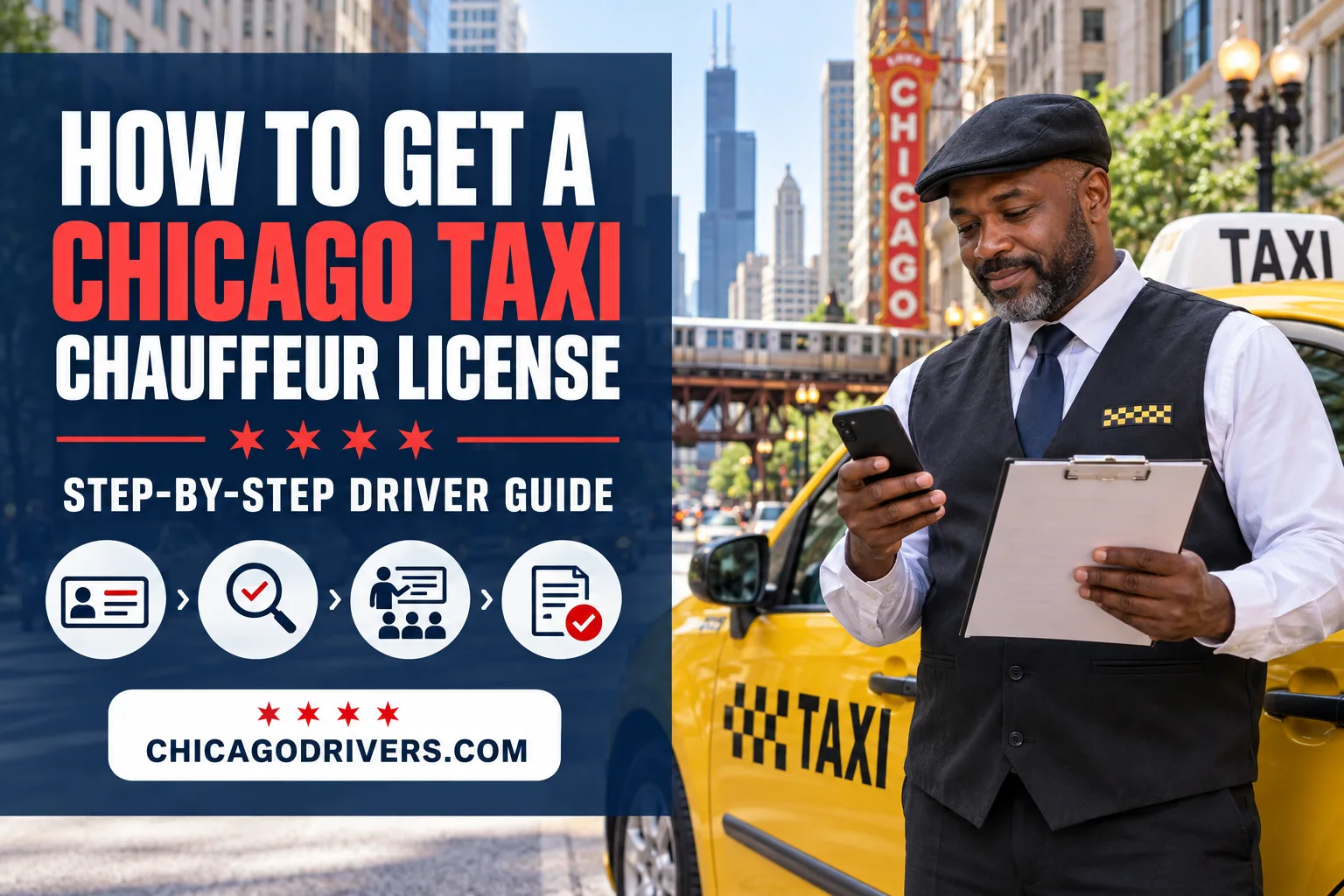
Driving a licensed Chicago taxicab requires a Taxi Chauffeur License, issued directly by the city rather than through a company. It's a more involved process than the rideshare route, and it's worth understanding the steps before you start.
The license and the law
Under city ordinance, anyone operating a licensed taxicab for hire within Chicago must hold a valid taxi chauffeur license — operating without one can carry fines starting around $500 per offense, and a lapsed license carries its own penalty even for a short gap. This is one of two "public chauffeur" license types the city issues directly (the other being the restricted/livery license), and taxi drivers apply for it themselves through BACP rather than through an employer.
Step 1: Complete the taxi chauffeur training course
New applicants must complete an approved taxi chauffeur training program and pass a final licensing exam. This is a multi-day course covering city rules, fare regulations, safety, and — importantly — how to serve passengers with disabilities, including a hands-on accessibility component. Course completion has to be dated within 6 months of your license application, so timing matters.
If you're already an experienced livery chauffeur in good standing for at least two years, you may qualify for an exemption from the full taxi training course — though you'd still need to pass the taxi written exam and complete an accessibility course.
Step 2: Background check and fingerprinting
You'll need to get fingerprinted through a BACP-approved agency and pass a national/FBI/state criminal background check. This step has its own timing rules: your fingerprint receipt needs to be dated within 30 days of your application, and results are generally valid for about 6 months. A license won't be issued until the background check clears.
Step 3: Driving record and licensing history
You'll need a certified copy of your driving record dated within 60 days of your application, and you must have held an active, permanent, state-issued driver's license for at least one year before applying.
Step 4: Clear any city debt
Applicants also need a debt clearance from the city's Department of Finance, confirming there's no outstanding debt tied to your name that would block licensing. This is submitted separately from your BACP application materials.
Step 5: Pick up your license in person
Once everything is approved, BACP will have you visit their Public Vehicle Operations Facility to collect your physical license. New applicants generally need to check in before the office's late-morning cutoff, so plan the visit for earlier in the day.
Renewal timing
Public chauffeur licenses (including taxi) list their own expiration date directly on the license card — for most drivers, that date lines up with their birthday rather than a fixed citywide date the way TNP emblems do. BACP recommends starting your renewal up to 60 days before that date to avoid a lapse.
Bottom line
The taxi license path takes longer and involves more steps than the rideshare route — training course, exam, fingerprinting, driving record, and a debt clearance all have to line up before you're approved. Start the process early, keep an eye on each document's expiration window, and don't wait until the last minute to book your training course.
This post is for general information only. For the most current requirements, checklists, and forms, check directly with the City of Chicago BACP Public Vehicle Division.