Chicago Drivers Weekly Update: Uber Data Breach, Lyft Lawsuit and Trucking Compliance Alert
Afzaal Zeb ·
November 9–15, 2026 | Industry News
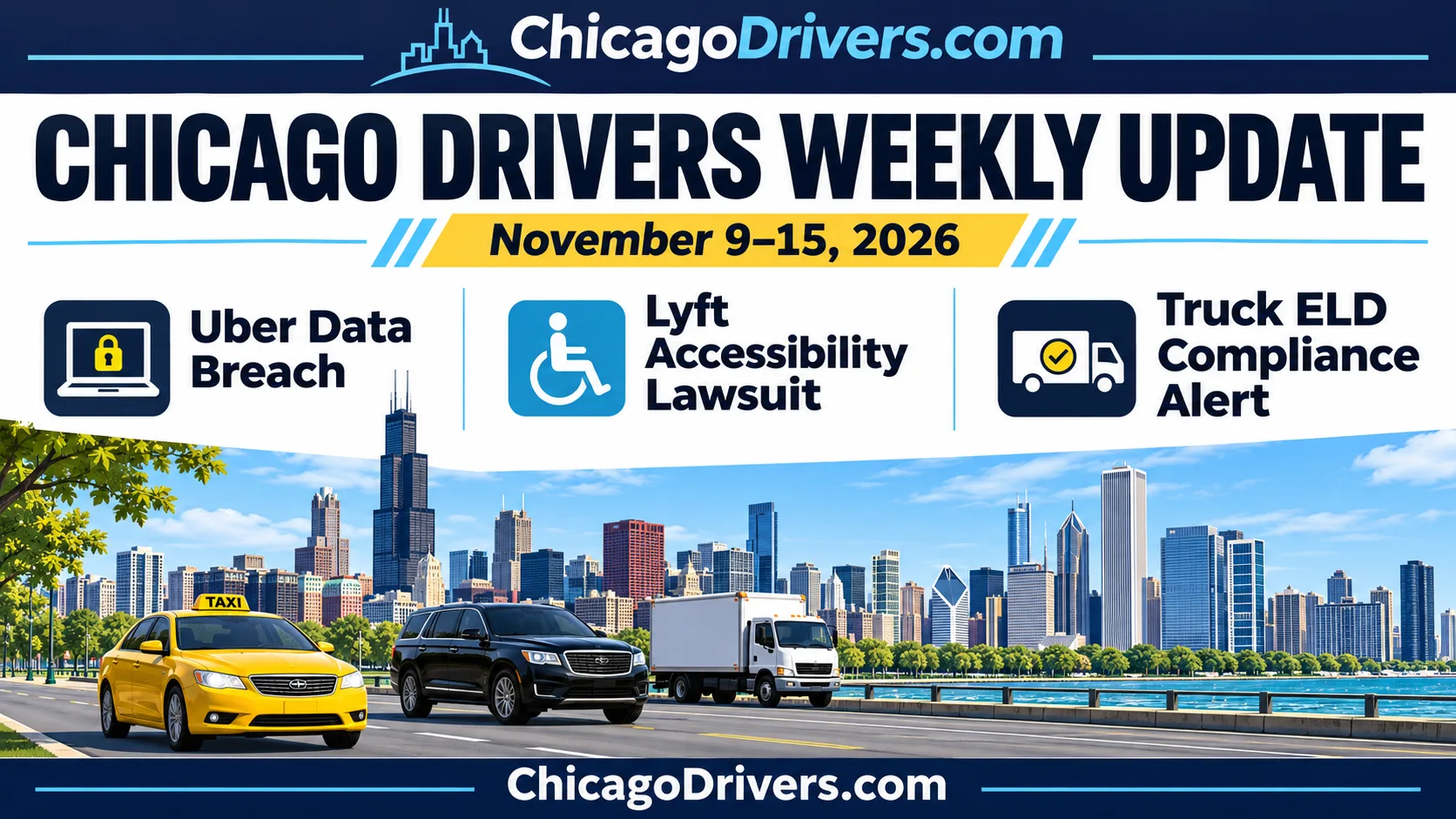
Chicago drivers have three important developments to check before starting the week: Uber is notifying people about a data breach, Lyft faces a federal lawsuit over disability access, and truck operators need to check whether their electronic logging devices remain compliant.
Here’s what happened—and what it means for drivers.
Uber sends breach notices to affected drivers
Uber began sending notices dated November 10 after personal information was accessed through one of its outside service providers.
According to the company’s notice, the provider alerted Uber on October 9 that its credentials had been compromised. Uber disconnected its data connections with the provider and investigated. On October 13, it determined that personal information had been accessed.
The incident happened in October. The notification to affected people is this week’s development.
TechCrunch reports that Illinois residents’ driver’s-license information was among the affected data, although the Illinois total remains unconfirmed.
Drivers who receive a notice should read it carefully. The public sample does not identify the information exposed for each individual, so the details in your own letter matter.
Uber is offering eligible recipients free credit monitoring and fraud assistance through Cyberscout, a TransUnion company. Enrollment must be completed within 90 days of the date on the letter. The length of coverage should also be listed in the individual notice.
Uber said it had not identified misuse of the information as of the notice date. That does not mean drivers should ignore the letter. Keep a copy, review account activity and verify unexpected messages before sharing identification or account details.
Lyft lawsuit puts accessibility rules back in focus
The U.S. Justice Department sued Lyft on November 9, alleging that passengers with disabilities were denied rides or faced other discriminatory treatment.
The allegations include refusals involving service dogs and stowable wheelchairs, improper cancellation charges and failures to accommodate certain passenger needs. The government is seeking damages and changes to Lyft’s practices.
Lyft disputes the allegations and says its policies already require drivers to accommodate passengers with disabilities.
For working drivers, the important distinction is that the lawsuit is new, but the accessibility obligations are not. No court finding against Lyft has been established by the filing itself.
Lyft’s existing service-animal policy warns that a verified wrongful refusal can lead to permanent deactivation. The policy also says allergies, fear of animals or religious objections do not excuse refusing a passenger with a service animal.
Chicago’s guidance applies beyond rideshare: taxi and livery chauffeurs must also accept passengers accompanied by service animals.
Before another shift, drivers should review their platform’s accessibility guidance, including how to handle service animals and stowable mobility devices. Lyft provides a short training video and printable guidance on the questions drivers may ask about a service animal.
Truck operators should check their logging devices now
Federal regulators announced November 12 that 133 electronic logging devices had been removed from the federal registry. The total includes 121 devices revoked by FMCSA and 12 voluntarily withdrawn.
For Chicago-area truck drivers and carriers using affected devices, this could mean replacement costs, changes to logging procedures and the risk of being placed out of service.
However, the federal announcement contains a deadline conflict. It says carriers have up to 60 days to replace the devices, but it also identifies November 24, 2026, as an enforcement date. Those statements do not line up with a November 12 removal.
Drivers and fleet managers should not guess which deadline applies.
Check the device’s exact model and identifier against FMCSA’s registered and revoked lists. If it is affected, contact the carrier’s safety department and FMCSA for the applicable logging instructions and replacement deadline. Do not rely only on a provider’s assurance that a device will return to the registry.
This alert concerns operators subject to electronic hours-of-service requirements. It is not a new logging requirement for ordinary taxi or rideshare drivers.
Livery drivers: check your own renewal date
A November 12 BACP reminder, reproduced in a public social-feed archive, urged operators with December 2026 livery expirations to renew early.
That reminder should not be read as proof that every Chicago livery license expires in December. The full city renewal checklist could not be independently retrieved for this update.
Check the expiration on your own license and renewal notice. Also check your vehicle’s inspection appointment separately. The city directs inspection questions and rescheduling requests to BACPPV@cityofchicago.org (opens in a new tab).
A general reminder is useful, but your individual license record determines what needs attention.
No new airport pickup change verified
Our review did not verify a new O’Hare or Midway pickup, staging or fee change during November 9–15. Drivers should continue checking direct operator notices, airport instructions and on-site signs.
The priorities for Monday are straightforward: review any Uber breach notice, refresh your accessibility knowledge and—if you operate a truck—confirm that your logging device is still compliant.
Sources
Uber security notice filed with the California attorney general — November 10 (opens in a new tab)
TechCrunch: Uber driver data breach — November 13 (opens in a new tab)
Justice Department: Lyft accessibility lawsuit — November 9 (opens in a new tab)
Associated Press: Lyft’s response to the lawsuit (opens in a new tab)
Lyft service-animal policy and training (opens in a new tab)
Chicago BACP: Ride-hail and service-animal guidance (opens in a new tab)
FMCSA: Electronic logging device removals — November 12 (opens in a new tab)
FMCSA registered and revoked device lookup (opens in a new tab)
BACP livery reminder reproduced in a public feed archive (opens in a new tab)
Chicago public passenger vehicle inspection schedule (opens in a new tab)
O’Hare ground transportation (opens in a new tab) · Midway ground transportation (opens in a new tab)