
Chicago Budget Proposal Puts Livery Inspections and Higher Parking Fines on Drivers’ Radar
Afzaal Zeb ·
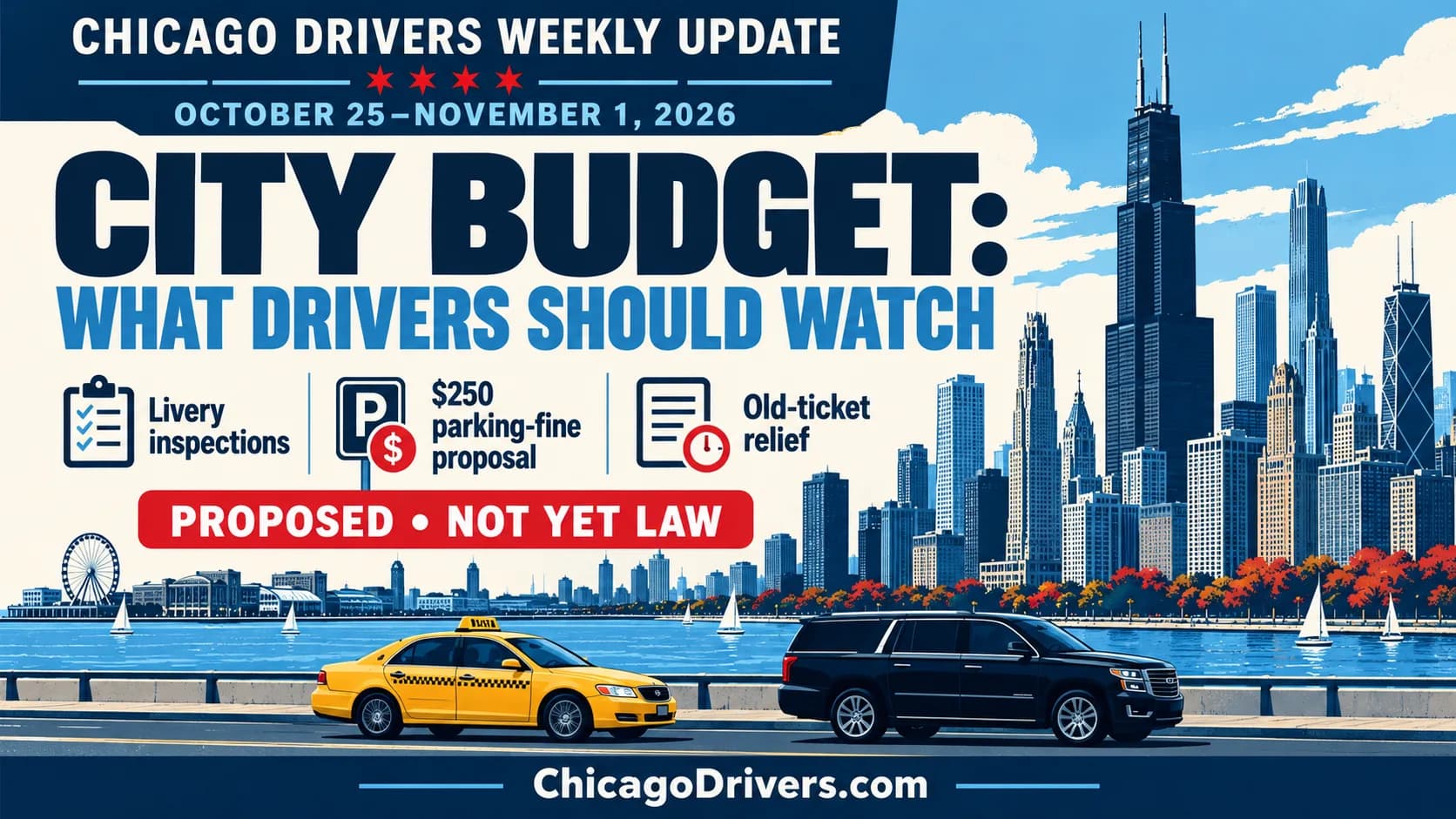
Chicago Drivers Weekly Update · October 25–November 1, 2026
Chicago taxi and livery operators have several reasons to follow the city’s budget debate. The proposed 2027 revenue ordinance includes annual inspections for older livery vehicles, higher penalties for certain vehicle-parking violations and a possible break on old ticket debt.
These are proposals, not new rules in force. The ordinance was introduced October 21 and remains under consideration. Its stated effective date is January 1, 2027, following passage and approval. The final version could change.
Older livery vehicles would face annual inspections
The proposal would put an annual inspection requirement into the municipal code for livery vehicles with a city-defined vehicle age of four years or more. A failed or missed inspection would mean a $100 reinspection fee.
Taxi operators would also face a higher reinspection charge: $100 instead of $75, with missed inspections explicitly included. For an owner-driver, the cost of returning for inspection can extend beyond the fee to time spent off the road.
Rideshare vehicles carrying physical advertising equipment already face an inspection requirement and a $100 inspection charge. The proposed change adds a $100 fee for failing or missing that inspection. A similar reinspection charge is proposed for wheelchair-accessible rideshare vehicles.
Owners should keep following their current inspection requirements. There is no reason to delay an existing appointment while waiting for the budget vote.
Certain parking tickets could reach $250
The ordinance would set a $250 fine for violations of the special-vehicle parking restrictions in Section 9-64-170(a) and (b). Current penalties are $75 for vehicles with a gross vehicle weight rating below 8,000 pounds and $125 for heavier vehicles.
These provisions concern restricted parking on residential and business streets, not every parking ticket in Chicago. Depending on the street and circumstances, they cover taxis, liveries, limousines, trucks and other commercial vehicles.
The rules contain exceptions, including active loading and unloading and some permitted taxi parking. Drivers who keep a work vehicle at home should check the restrictions for that vehicle and location rather than assume a city sticker makes overnight parking legal.
Old-ticket relief is also on the table
A proposed debt-relief window would run from May 3 through August 31, 2027. Eligible drivers and vehicle owners could pay the original fine on qualifying older violations and receive a waiver of specified penalties, interest and collection charges.
The proposal generally looks at eligible violations for which a final determination and fine were imposed by December 31, 2024. Exclusions apply, including certain collection proceedings and other specified violations or fees. It is not blanket ticket forgiveness, and amounts already paid would not be refunded.
For now, keep payment records and ticket numbers together. Do not stop an existing payment plan or ignore a deadline in anticipation of relief that has not been approved.
What drivers should do now
The practical move is to stay current on inspections, check where the work vehicle is parked and follow the budget vote. Any final change should be checked against the adopted ordinance and BACP or Department of Finance instructions before drivers change how they operate.
For taxi fuel surcharges, follow BACP’s latest industry notice—not an individual gas station’s price. A lower pump price alone does not establish that the city has ended an authorized surcharge.
Sources
City Clerk: 2027 Chicago budget documents (opens in a new tab)
Proposed revenue ordinance: Articles III, V, VI and X (opens in a new tab)
Ordinance status and legislative history (opens in a new tab)
Chicago Code: special-vehicle parking restrictions (opens in a new tab)
Chicago Code: current parking penalties (opens in a new tab)
Chicago Code: taxi fare and fuel-surcharge rules (opens in a new tab)


