
Delivery Driver's Guide to Chicago: DoorDash, Uber Eats, Grubhub, Instacart and the City's Layout
Afzaal Zeb ·
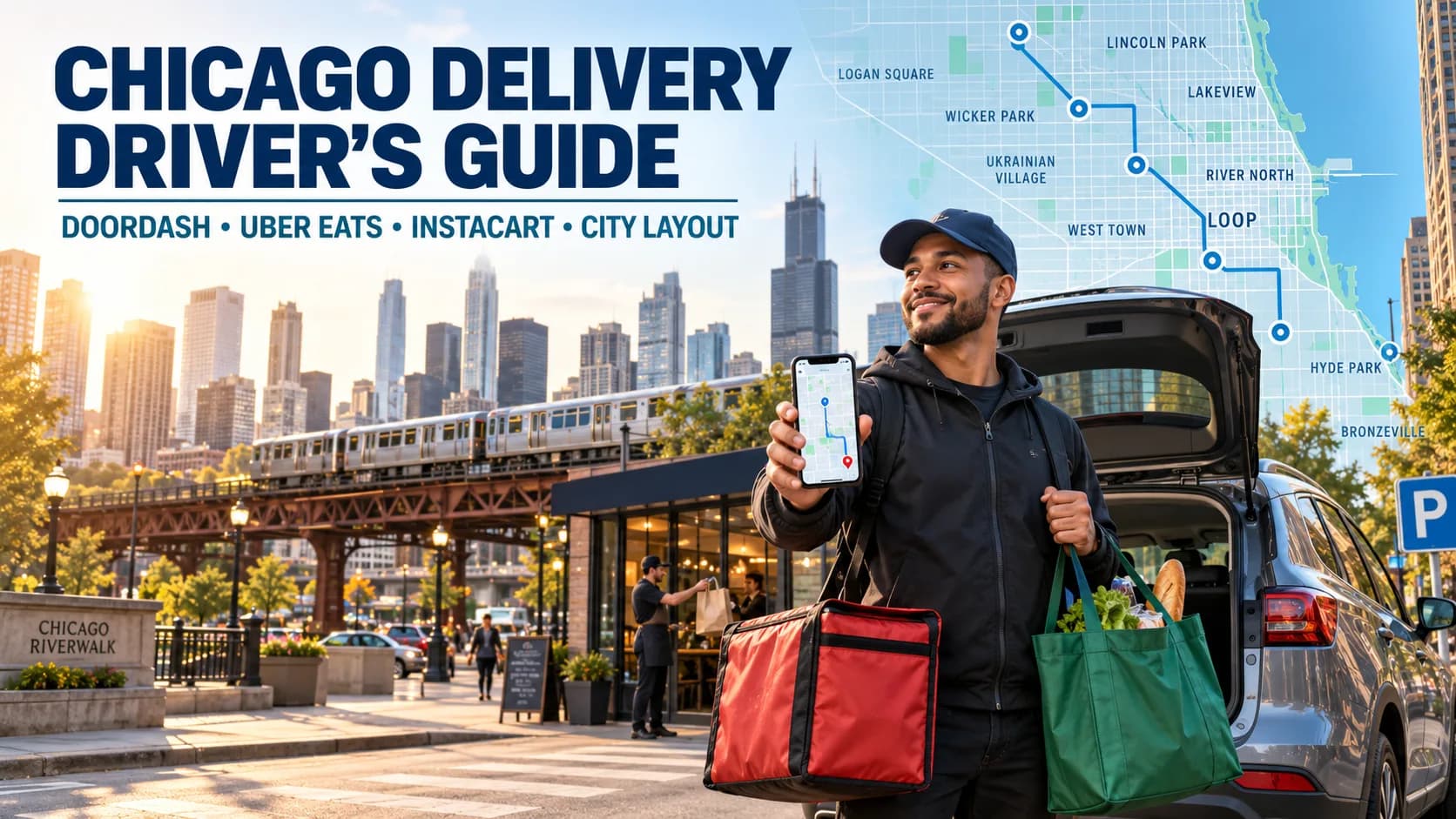
Delivery driving in Chicago has its own set of challenges that rideshare driving doesn't — you're not just getting someone from A to B, you're navigating building access, parking restrictions, and a city grid that rewards knowing the shortcuts. Here's what actually matters if you're running DoorDash, Uber Eats, Instacart, Grubhub, or similar platforms around the city.
High-rises are the biggest time sink
Chicago has more high-rise residential buildings than most cities delivery apps were originally designed around, and that changes the math on every order. A delivery to a house takes 30 seconds. A delivery to a 40-story building downtown or in a dense neighborhood like Lakeview or Streeterville can mean waiting for a buzzer response, getting past a doorman, finding the right elevator bank, and locating a unit number that isn't where the building directory suggests. Budget extra time for any address in a building with a doorman or a locked lobby — and when the app allows it, texting the customer that you've arrived and are waiting on building access can save you from an order timing out on you.
Know your loading and parking situation before you're stuck
Double-parking in Chicago isn't just risky for a ticket — in some neighborhoods it can get your car boxed in or blocking a bus route, which draws attention fast. Look for:
Actual loading zones, which exist near many commercial strips and are legal to use briefly for pickup and drop-off.
Metered parking, which still applies during enforcement hours even for a two-minute stop — a lot of drivers eat unnecessary tickets treating a quick pickup as exempt.
Residential permit zones, especially in neighborhoods like Lincoln Park, Wicker Park, and parts of the North Side, where non-permit parking is restricted at specific hours.
If you're delivering somewhere regularly — a restaurant strip you hit every shift — it's worth learning exactly where you can legally stop near it rather than guessing every time.
The Loop and River North move differently than the rest of the city
Downtown delivery comes with its own rules: one-way streets, heavier traffic, tighter turn restrictions, and a much higher concentration of high-rise deliveries. It's also where a lot of restaurant density lives, so order volume tends to be higher — but so is the time cost per delivery once you factor in building access and parking. Weigh whether staying downtown during a lunch or dinner rush is actually more efficient than working a neighborhood with houses and smaller apartment buildings, where each delivery is faster even if individual orders are more spread out.
College and hospital-heavy areas have their own patterns
Areas near UIC, Northwestern's Chicago campus, and the major hospital corridors (like the Illinois Medical District) generate steady delivery volume with their own quirks — dorm and student housing buildings often have their own access rules, and hospital campuses can have restricted vehicle access near entrances that aren't obvious until you've been sent to one. If you're working these areas regularly, a first trip or two of just learning the building layouts pays off on every order after that.
Weather changes the math more than people expect
Chicago winters slow everything down — icy sidewalks near entrances, slower foot traffic in and out of buildings, and drivers who are more cautious about double-parking near snow-narrowed streets. Summer brings its own version: street festivals, construction closures, and event traffic that can turn a normally quick route into a detour. Checking for closures or major events near your delivery zone before a shift, especially downtown or near event venues like the United Center or Soldier Field, can save you from getting stuck mid-delivery.
Stacking orders works differently by neighborhood
Platforms often offer stacked orders (multiple deliveries at once) more heavily in denser areas with higher restaurant concentration — which is exactly where building access and parking eat the most time. A stacked order that looks efficient on paper can end up slower than two separate single orders once you add up elevator waits and parking searches. Pay attention to whether stacking is actually saving you time in your specific area, rather than assuming it always will.
Bottom line
Delivery driving in Chicago rewards local knowledge more than raw hustle — knowing which buildings have easy access, where you can actually park for two minutes without a ticket, and which neighborhoods are worth working during which hours makes a bigger difference than working harder in the wrong spot. The time you spend learning a zone's quirks in your first few shifts pays off on every delivery after that.