
Chicago Driver Update, Sept 21, 2026 - Sept 27, 2026: Fuel Costs, Airport Pickups and Rideshare Rules
Afzaal Zeb ·
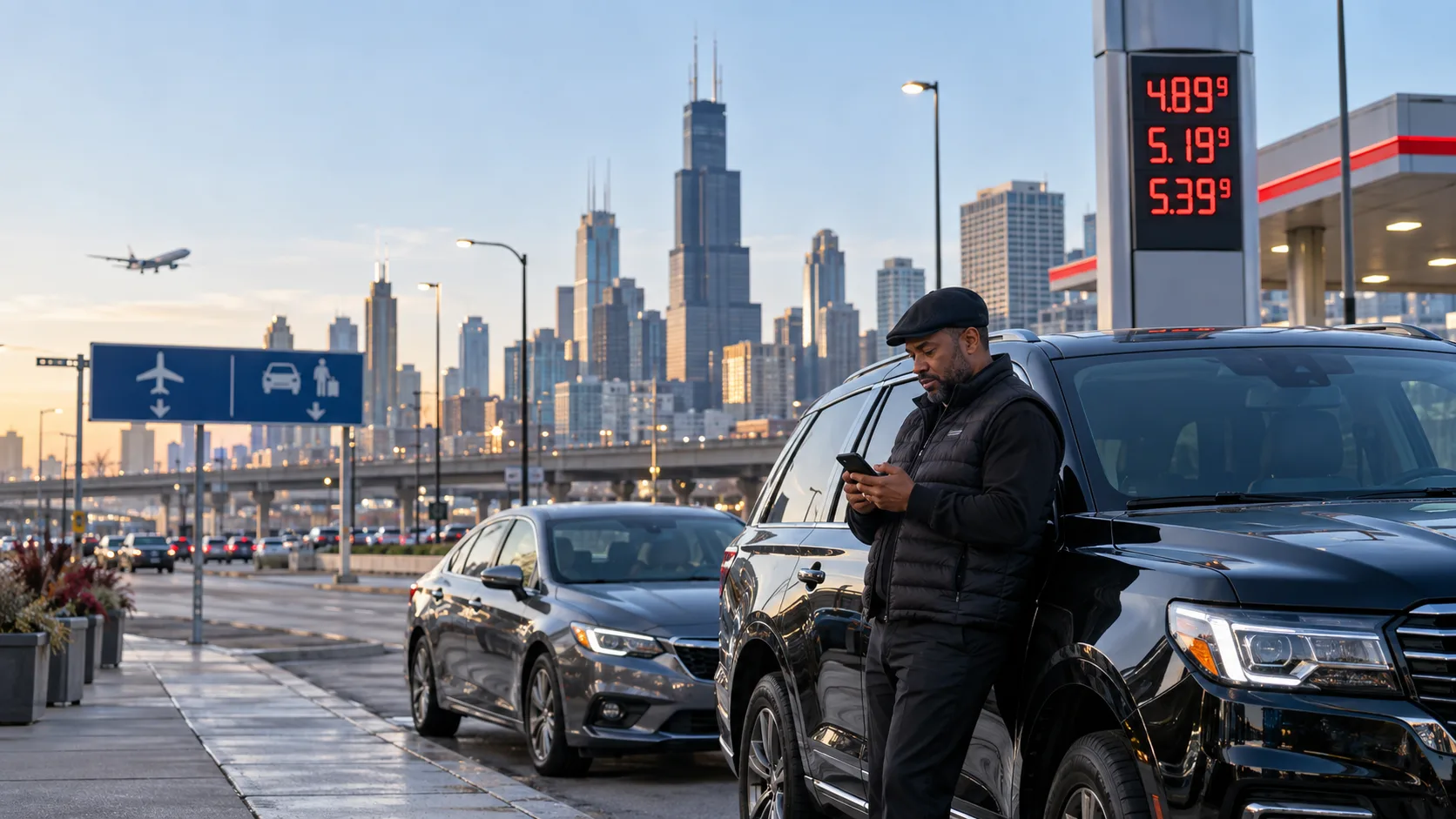
Chicago drivers did not receive a major new BACP rule or airport restriction this week, but that does not mean the market was quiet. Fuel costs remain a serious concern, the City proposed extending Lyft’s Divvy contract, and Illinois is moving closer to implementing its new rideshare collective-bargaining law.
Here is what rideshare, taxi and livery drivers need to know—and what may affect earnings in the weeks ahead.
Chicago fuel prices are still putting pressure on drivers
Fuel remains the most immediate issue for working drivers. As of September 27, the average price of regular gasoline in the City of Chicago was approximately $5.21 per gallon. That was about 13 cents lower than one week earlier, but still nearly 38% higher than the same time last year.
Diesel moved in the opposite direction. The citywide average reached approximately $7.00 per gallon, up about 13 cents in one week. Chicago diesel briefly reached a record average of more than $7.01 on September 26.
For a driver using a gasoline vehicle that averages 25 miles per gallon, fuel alone now costs about 21 cents per mile. A driver covering 1,000 miles per week is spending roughly $57 more on regular gasoline than at this time last year.
That difference matters. Drivers still have to pay for insurance, depreciation, repairs, tires, car washes, airport fees and vehicle financing. When fuel rises but trip pay does not rise at the same rate, the driver’s real profit falls—even if gross weekly earnings look unchanged.
Drivers should track fuel as a cost per mile, not simply as a weekly total. This makes it easier to compare actual vehicle operating costs with the amount earned from each platform or type of work.
Lyft and Chicago propose a longer Divvy agreement
On September 23, Mayor Brandon Johnson and the Chicago Department of Transportation introduced a proposal to extend Lyft’s agreement to operate Divvy for another five years. If approved, the extension would keep Lyft operating the city-owned bicycle and scooter system through 2033.
The proposal includes pricing protections beginning in 2027, additional equipment and stations, and an expansion of Divvy’s scooter Core Area into neighborhoods including Lakeview, Uptown, South Shore and Woodlawn.
Divvy has become a larger part of Chicago’s transportation market. The system recorded consecutive one-million-ride months in July and August 2026, according to the City.
For rideshare and taxi drivers, the immediate effect is limited. Divvy primarily competes for shorter trips and first- or last-mile transportation. A larger and more affordable network could modestly reduce demand for some short urban rides, particularly during good weather.
However, the proposal is not a change to Lyft’s ride-hail driver pay, fees, eligibility rules or deactivation policies. It was introduced and referred for City Council consideration; it has not yet received final approval.
Current O’Hare and Midway pickup locations
No new airport pickup rule was confirmed this week, but drivers should make sure they are using the current designated zones.
At O’Hare International Airport, standard rideshare pickups are currently available at:
Terminal 2 on the upper level, at zones 2A through 2G.
Terminal 3 on the upper level, at zones 3G through 3K.
Black Car pickups continue on the lower level at all terminals. Drivers should always follow the pickup location shown in their app because airport traffic conditions and assigned zones can change.
At Midway International Airport, the general rideshare pickup area is on the lower level outside baggage claim, using the designated zones near Doors 2 through 4. Lyft’s current driver instructions direct pickups to the center lane near Door 4.
Drivers should not wait or circle at the terminal when a passenger is delayed. Follow the platform’s instructions and return to the designated staging or holding area when required. Airport citations are generally the driver’s responsibility.
Illinois rideshare-union law enters its implementation stage
Illinois’ Transportation Network Driver Labor Relations Act took effect on August 7, 2026. The law establishes a statewide process through which eligible rideshare drivers can organize, select a representative and bargain collectively with covered transportation network companies.
Potential bargaining subjects include compensation, benefits, safety, paid leave, working conditions and deactivation policies.
The law also creates a Rideshare Workers Support Fund. Covered rideshare companies are expected to begin paying a four-cent fee for each trip originating in Illinois approximately 90 days after the law’s effective date, placing the expected starting point around November 5, 2026. State officials say companies are prohibited from passing this fee on to passengers.
No new implementation rule for this law appeared in the September 25 edition of the Illinois Register. Drivers should therefore be cautious about social-media claims suggesting that a union has already negotiated new statewide pay rates or benefits. The law creates the bargaining process; it does not automatically establish a new minimum rate for every ride.
What Chicago drivers should do now
For most working drivers, the practical priorities are straightforward:
Calculate fuel cost per mile. Use actual MPG and the price paid at the pump.
Compare net earnings—not only gross earnings. Include fuel, insurance, maintenance, depreciation and vehicle payments.
Review airport pickup instructions before entering ORD or MDW. Do not rely on an old screenshot or social-media post.
Watch Illinois union-law implementation carefully. Separate official state notices from organizing claims or rumors.
Document changes inside the driver apps. Save screenshots of significant updates to pay, airport rules, fees or deactivation procedures.
The bottom line
Chicago’s driver market did not undergo a major regulatory change this week, but costs and competition continue to move. Gasoline remains expensive, diesel reached a new record, and the growth of Divvy shows that Lyft’s role in Chicago transportation extends beyond rideshare trips.
The next consequential development may come from implementation of Illinois’ rideshare collective-bargaining law. Until official rules, organizing petitions or platform responses are released, drivers should treat specific claims about new pay or benefits as unconfirmed.
ChicagoDrivers.com (opens in a new tab) will continue monitoring BACP notices, airport operations, Uber and Lyft policy changes, insurance and licensing developments, and other changes that affect working drivers.
Sources
City of Chicago: Proposed Divvy contract extension (opens in a new tab)
Chicago O’Hare taxi, livery and rideshare information (opens in a new tab)
Chicago Midway taxi, livery and rideshare information (opens in a new tab)
Illinois Secretary of State: Rideshare driver collective-bargaining law (opens in a new tab)